Oferim soluții in segmentul agrivoltaic
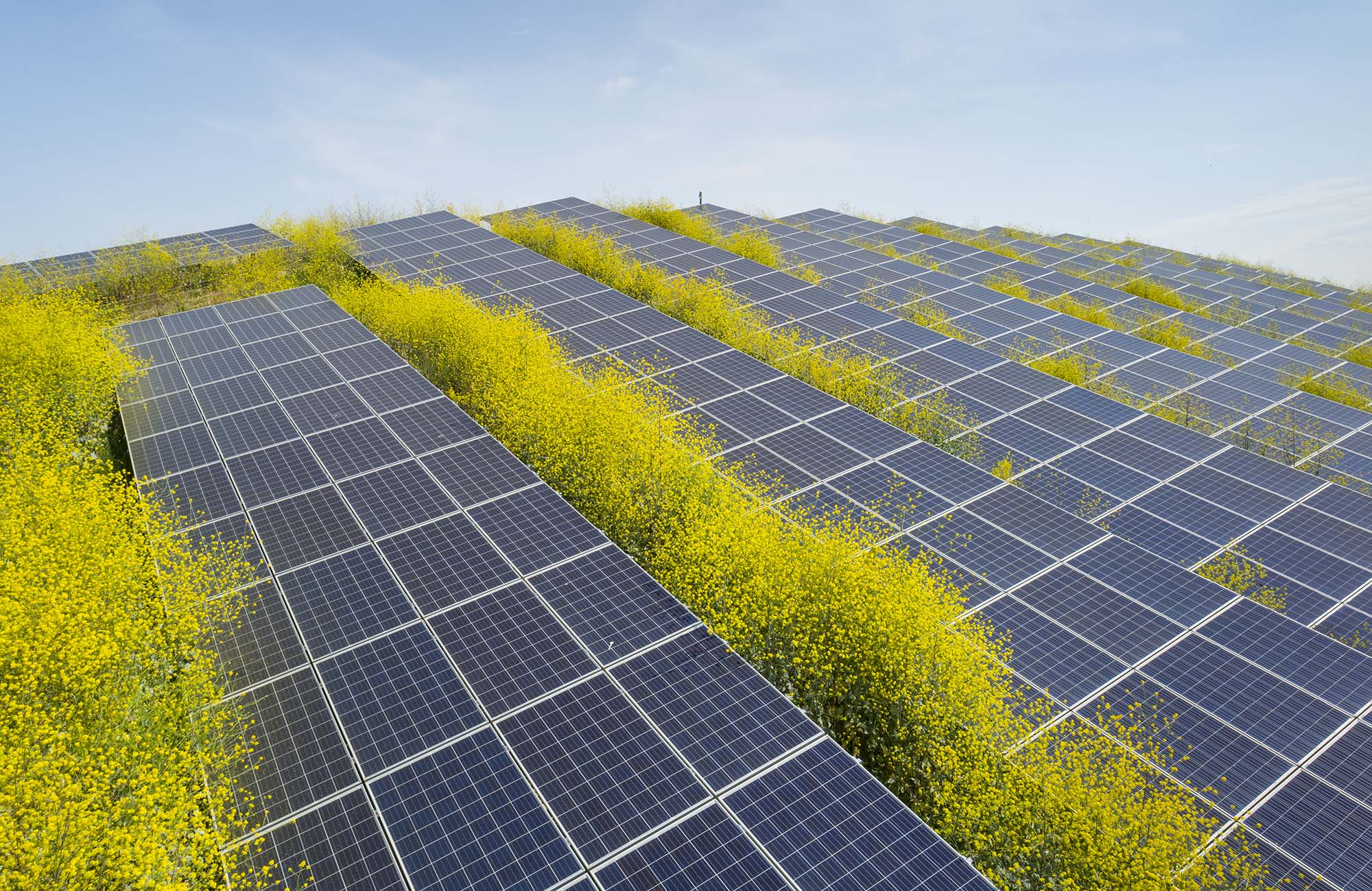
Agrivoltaics involves the combination of agricultural crops with photovoltaic panels installed at a sufficient height to allow machinery to pass underneath.
When you choose photovoltaic panels as a source of renewable energy and want to install them on your land, the space underneath them can no longer be used for any purpose.
It involves the installation of photovoltaic systems for electricity production mounted above crops, allowing for the planting of fruits and vegetables, access to light at certain times of the day, and shade during the hot hours of the day.
The benefit is twofold: you generate clean energy and simultaneously benefit from a bountiful crop.
The agrivoltaic system provides fruits and vegetable crops with sufficient light, humidity, and suitable temperatures for planting, germination, and development:
They open their pores or stomata (small openings on the epidermis of leaves or plant stems that allow for gas exchange with the external environment and the absorption or release of water from the plant) and begin to absorb carbon for photosynthesis, thereby releasing water through the leaves. In the end, a cool microclimate is created.
Photovoltaic panels protect plants from excessive heat, cold, and UV damage, thereby increasing the yield of certain crops
Photovoltaic panels can lose efficiency if temperatures are extremely high, and the sun is strong. This is where small cooling systems, in the form of plants, come into play. Through transpiration, they manage to cool the panels and the area underneath, protecting the panels from the severe effects of high temperatures.
As global temperatures rise, panels can also help conserve dwindling freshwater resources by reducing evaporation from both plants and soil.
This approach does not create conflicts in land use between agriculture and energy production, allowing both photovoltaic operators to have quality land and farmers to increase crop yields. This system addresses the main challenges of sustainable development, adding real benefits to farmers.
So, you enjoy more efficient photovoltaic panels as well as healthy plants.
We come to you with solutions tailored to your needs, allowing you to achieve sustainability goals by reducing carbon emissions and electricity costs, as well as reducing CO2 emissions into the atmosphere.
We aim to change the way they use energy through simple, profitable, and safe solutions for the production and consumption of renewable energy.
The company specializes in the construction of photovoltaic power plants and parks. For many years, we have been working in a B2B format, implementing investment and construction projects as a general contractor. Upon the client's request, we provide support for all the licensing and approval procedures necessary to obtain a license for the production of electrical energy and a prosumer certificate.
The experience accumulated in the implementation of photovoltaic projects for top companies in Romania, including Mega Image, Kaufland, Tenaris, and feasibility studies conducted for companies from various industry segments (e.g., Angst), has led to a deep understanding of the market's needs and expectations.
Here are the main types of photovoltaic power plants:
– Energy assessment to identify energy efficiency options;
– Proposal of energy efficiency solutions:
– We carry out: energy audits, SF, PT, DALI
– We come up with financing proposals.
Together, we find the best solutions tailored to your business's needs and characteristics, so you can quickly enjoy reduced electricity costs.
We offer complete solutions for the implementation of photovoltaic, wind, and green hydrogen production systems, which have a direct and rapid impact on the natural environment as well as businesses. This is how we stand by our clients in almost all fields of activity.
Photovoltaic panels are installed above agricultural crops to allow access for machinery.
By installing a tracker system, the panels can follow the sun’s direction and tilt vertically to let rain pass. In the horizontal position, they can limit damage caused by adverse weather conditions such as hail.
Depending on the degree of inclination and the season, soil temperature can be modified, reducing the effects of drought or frost.
Over time, it has been proven that the fruits and vegetables that respond best to agrivoltaic technology include lettuce, apples, tomatoes, cherries, potatoes, blueberries, strawberries, and cherries, among others.
An agrivoltaic system installed in an apple orchard provides trees with a less stressful environment and reduced irrigation requirements. Photovoltaic panels offer protection against frost damage. The shading generated by the panels can be used as a fruit thinning strategy that can be adjusted throughout each season.
The system is recommended for apple crops as they require protection against hail, and photovoltaic panels can replace hail nets.
- Analysis and dimensioning of photovoltaic parks - Feasibility study according to Government Ordinance 907
Preparation of the technical project at the level of DTAC (technical documentation for obtaining the building permit) and DE (execution details).
Investment amortization calculation, IRR according to Government Ordinance 907
At MALMA, we always focus on providing customized solutions and support our clients throughout the entire process, from the initial stage to post-implementation.
Every business has unique needs that must be considered in order to provide customized energy efficiency solutions. That's why we carefully analyze each client's energy consumption, assess their needs and objectives, and identify what needs improvement.
These solutions will cover the installation of photovoltaic systems and energy management systems, energy-efficient lighting, and the utilization of waste heat, depending on specific needs.
We identify suitable financing programs for each identified energy efficiency solution, provide support in accessing European funds, and help choose funding sources for investment projects and more.
The implementation of our energy efficiency systems is carried out quickly and with minimal disruption to activities, allowing companies to continue operating as usual while benefiting from significant savings on electricity costs.
Completed Projects
Satisfied Clients
Innovative Solutions
Specialized Team
An agrivoltaic system combines agricultural crops with photovoltaic panels installed above them, at a height that allows machinery to pass underneath. Unlike panels mounted directly on the ground, the space underneath stays in agricultural use: it allows fruits and vegetables to be planted, lets light reach the crops at certain times of the day and provides shade during the hottest hours. This way, you generate clean energy and get a bountiful crop at the same time.
An agrivoltaic system gives fruit and vegetable crops sufficient light, humidity and suitable temperatures for planting, germination and development. The panels protect plants from excessive heat, cold and UV damage, which can increase the yield of certain crops. In turn, the plants become small cooling systems: through transpiration, they cool the panels, which would otherwise lose efficiency at extremely high temperatures.
Photovoltaic panels mounted above crops can help conserve freshwater resources, because they reduce evaporation from both plants and soil. In an apple orchard, for example, the system gives trees a less stressful environment and reduced irrigation requirements. These advantages matter more and more as global temperatures rise.
An agrivoltaic system suits agricultural crops, fruit and vegetable production and orchards. The fruits and vegetables that respond best to this technology include lettuce, apples, tomatoes, cherries, potatoes, blueberries and strawberries. In apple orchards, the panels offer protection against frost damage, while in pear orchards they can replace hail nets.
With a tracker system, photovoltaic panels can follow the sun’s direction and tilt vertically to let rain pass. In the horizontal position, they can limit damage caused by adverse weather such as hail. Depending on the tilt and the season, soil temperature can also be modified, reducing the effects of drought or frost.
No. The agrivoltaic approach does not create land-use conflicts between agriculture and energy production. Photovoltaic operators get access to quality land, while farmers can increase their crop yields. The panels are installed above the crops so that agricultural machinery can still access the land.
Malma Energy offers solutions in the agrivoltaic segment as a general contractor specialized in building photovoltaic plants and parks. The integrated service includes the analysis and sizing of the photovoltaic park, the feasibility study according to Government Decision 907, the technical project, the cost-benefit analysis, installation, commissioning and grid connection, followed by maintenance and park operation. The team also comes up with funding proposals.
You can request a quote by filling in the form below with your name, email, company, budget and other details about your project. Malma Energy’s specialists analyze your business’s electricity needs and come up with tailored options. You can also call 0722221150 or email contact@malmadevelopment.ro.
To provide the best solutions, our specialists conduct detailed analyses of your consumption habits and your company's electricity needs, tailored to your specific requirements.
Fill out the form below and provide us with some details about your interests. A MALMA consultant will get in touch with you shortly!
Adding {{itemName}} to cart
Added {{itemName}} to cart

